
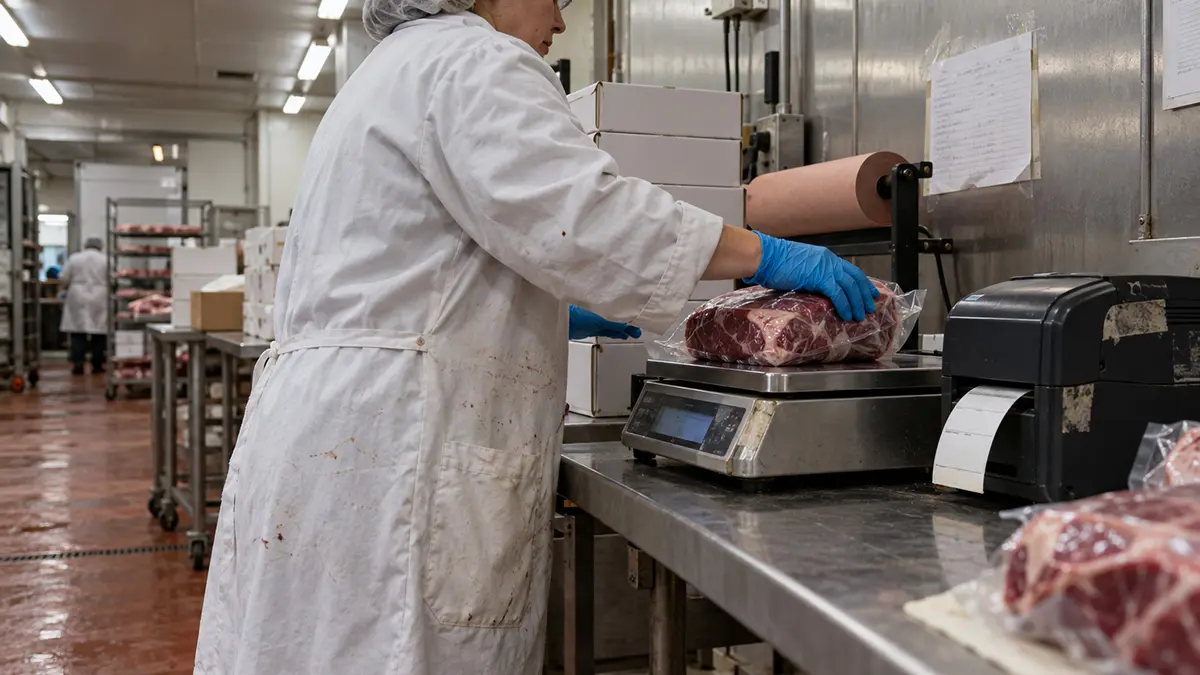
A lot of small processors set prices by calling around to see what the plant down the road charges. That’s useful to know. But it only tells you what customers are used to paying, not whether your plant makes money at that price.
Start with cost per head
The number that matters most is what it actually costs to run one animal through your plant. That means adding up everything: wages and payroll taxes, packaging, utilities, insurance, loan payments, repairs, and depreciation on the building and equipment.
Count your own time, too. If you’re on the floor 60 hours a week and not paying yourself, your prices are covering up a cost that will catch up with you eventually.
Labor is usually the biggest piece
A meat processing network based at Oregon State University put together sample budgets for three sizes of plant, modeled on real operations. Labor was the largest expense in every one.
| Sample plant | Labor | Total expenses | Labor share |
|---|---|---|---|
| Very small custom-exempt, 4 employees | $110,000 | $231,000 | 48% |
| Small inspected, 10 employees | $300,000 | $565,000 | 53% |
| Regional inspected, 60 employees | $2.8 million | $4.44 million | 63% |
Your plant won’t match these exactly. But if you don’t know your labor cost per head, you don’t really know what anything costs.
Know your break-even volume
Some costs stay put no matter how busy you are. Loan payments, insurance, and depreciation are the same whether you process five head this week or 25.
In those same budgets, the very small plant needed processing revenue equal to about 460 beef a year just to break even. The small inspected plant needed roughly 1,130. Below that line, the plant loses money no matter how good the work is.
That number shapes how you handle slow months and which services are worth keeping. It’s also one of the first things a lender asks about. And for a group planning a new plant, it answers a hard question early: can the area supply enough animals, all year long, to keep the doors open?
A simple place to start
Pull last year’s income and expenses and sort them into fixed and variable costs. Track labor hours by species and service for a few weeks. Then divide your costs by head processed and compare that to your price list, one service at a time.
A spreadsheet is plenty. A few weeks of honest records will tell you more than any competitor’s price list.
Protein Performance Group builds cost and break-even models for processors and the lenders who back them, pairing agricultural economics with a working knowledge of how plants run. If you’re pricing services at an existing plant or testing whether a new one pencils out, we’re glad to talk it through.